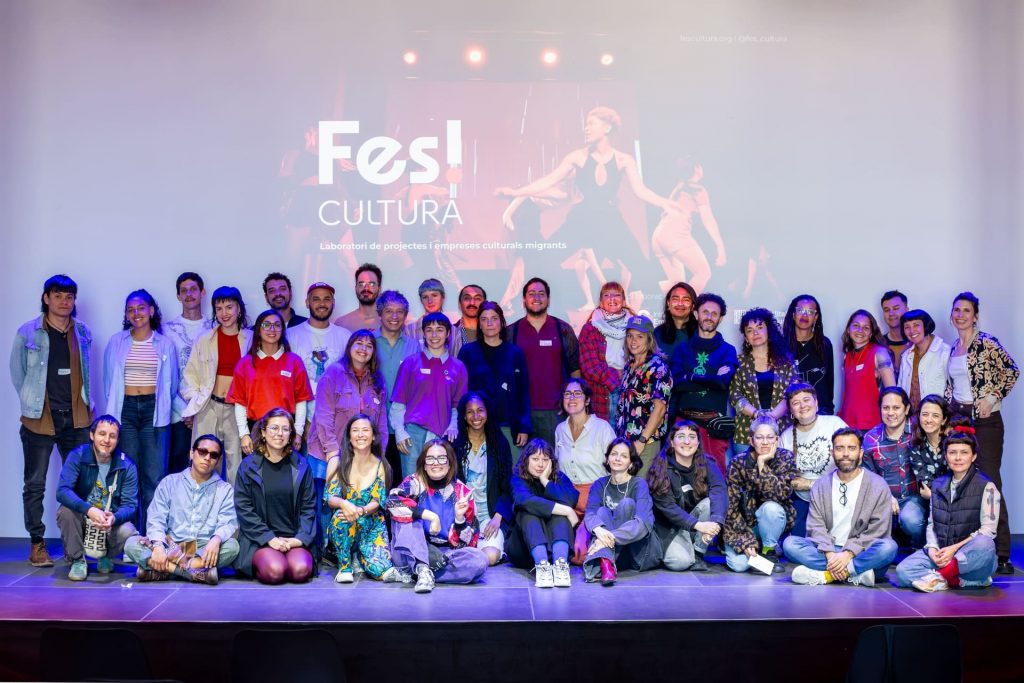

Culture is key to ecosocial transformation because it allows us to connect with other people, build shared narratives, imagine alternative futures in defense of life, and move into action. That is why, at Fes! Cultura, we created #AccióClima, a space for intercultural co-learning where artists, cultural managers, and environmental activists come together to identify challenges and imagine artistic and creative proposals that address ecosocial issues. And we do so by placing cultural diversity, anti-racist, and decolonial approaches at the center.
But what can we do through culture for ecosocial transformation? Here are 5 ideas:
- Minimize impact
Like all human activity, culture has environmental impacts that must be acknowledged and minimized. Cultural organizations have the responsibility to implement practices that reduce our ecological footprint, serving as models for other sectors. Reducing energy consumption, ecological waste management, and promoting sustainable transport are examples of actions that not only reduce the direct impact of our organizations, but can also raise awareness about sustainable practices.
- Change mindsets
Culture is a vehicle for messages and imaginaries capable of transforming mindsets and values. Through artistic and cultural expressions, we can communicate information about the ecosocial crisis and propose changes in our way of life in ways that emotionally resonate with people. Cultural narratives have the power to reaffirm values aligned with the defense of human well-being, diversity, and the collective care of all forms of life on the planet.
- Modify behaviours
As a living and participatory practice, culture has the capacity to modify or inspire new behaviours. Immersive and participatory cultural experiences can help people adopt more sustainable habits in practical and experiential ways. These experiences allow people to internalize sustainable values and practices through direct action and collective reflection. Furthermore, culture can spread and adapt knowledge and traditions that incorporate ecological practices, facilitating their long-term adoption.
- Create communities
Cultural practice has the ability to bring people together, generating spaces for encounter and dialogue that encourage the formation of communities committed to sustainability. Through shared cultural activities, we can build support networks and collective actions that promote transformation at the local level. In addition, cultural spaces can function as laboratories for experimenting with sustainable practices on a small scale, which can later expand at the community level.
- Denounce structures
Through cultural action, we can denounce unsustainable structures and practices. Artistic expression is a way to point out injustices and systemic problems in impactful and memorable ways, challenging the status quo and promoting alternative visions of the future. These actions not only make problems visible, but can also inspire and mobilize action. Our cultural spaces are platforms to amplify the voices of activists and communities affected by the ecosocial crisis.
By: Diego Salazar