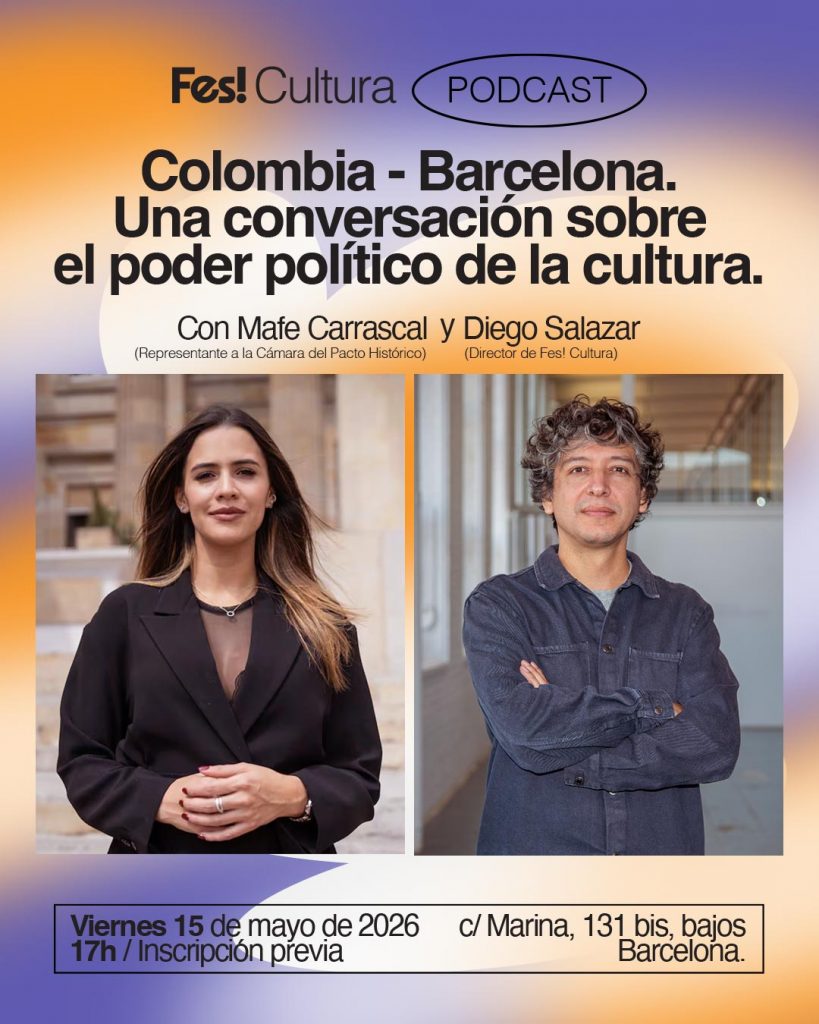

When migrants don’t build their own narratives, others build them for them. Mafe Carrascal, Representative to the Colombian Chamber, talks about culture, diaspora and political power in a new episode of Fes! Cultura Podcast recorded live in Barcelona.
Culture names, organises, reclaims and builds community where institutions fail. For migrants, cultural space is a place of self-affirmation, of building their own narratives and of collective organisation. That is why guaranteeing cultural rights means guaranteeing access to all other rights, and building a migrant cultural subject means building a political subject.
From that conviction, we recorded live a new episode of Fes! Cultura Podcast, a conversation between Mafe Carrascal — Representative to the Colombian Chamber and one of the most relevant voices in Latin American progressivism — and Diego Salazar — cultural manager and researcher at Connectats Cooperativa. A very inspiring encounter with Colombian cultural and social agents in Barcelona, which arrived at a crucial moment. Just over two weeks before the presidential elections, with more than six million Colombians living outside the country and an authoritarian impulse that turns the defence of migrants into a struggle for democracy itself.
Mafe carries it embodied in her own story. Her family knows forced displacement first-hand, and her political trajectory — from street and digital activism to the Chamber of Representatives — has been shaped at every stage by culture as a tool for mobilisation. Collective weaving, music, public performances as repertoires of political action. She knows that whoever organises through culture builds community, and an organised community can exercise collective power.
In the conversation, Mafe details what that means in legislative terms. The Labour Reform she coordinated in Congress puts the dignity of work at its centre — fair working hours, rights for domestic workers, recognition of care as the foundation of the economy. And within that framework, a specific chapter for cultural workers — actors, technicians, managers, producers — who have historically not been named for what they are. Naming them is the first step to protecting them.
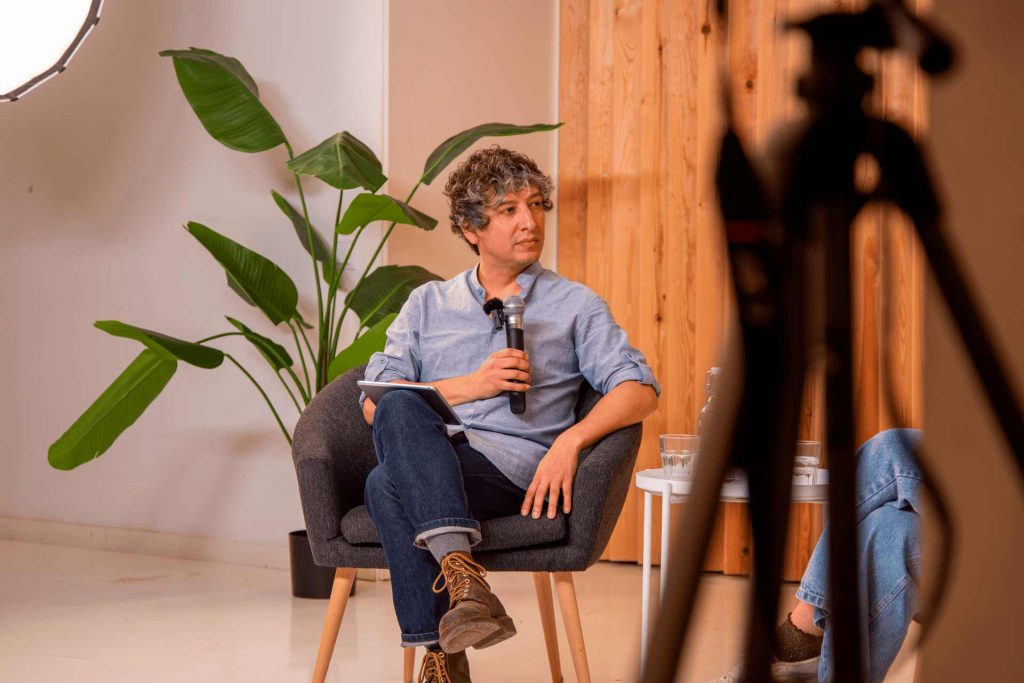
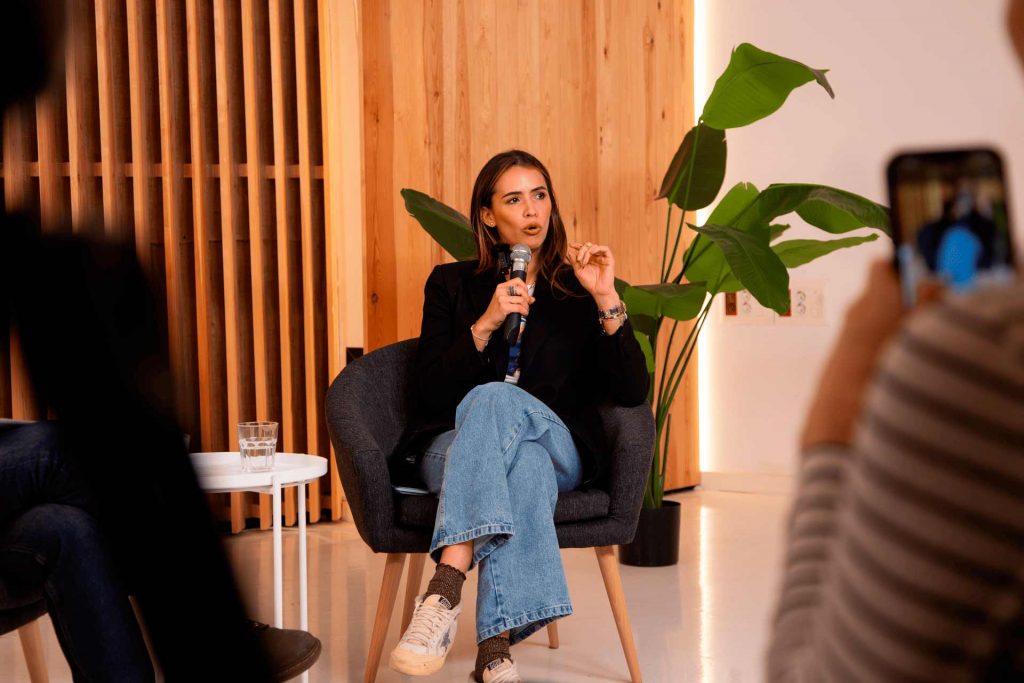
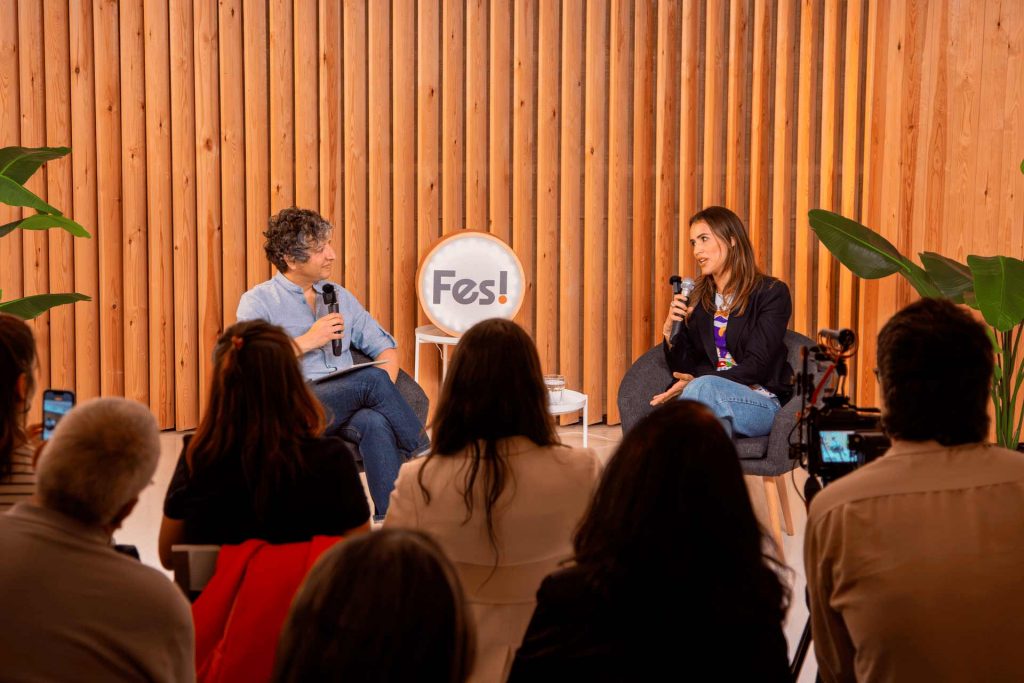
But the conversation went beyond Colombian legislation. We talked about touristification and gentrification closing down grassroots cultural spaces in Bogotá and Barcelona — processes that follow the same model applied to different cities. We talked about the need for a third cultural sector, public and community-based, that responds to the logic of the territory and its inhabitants. And we talked about cultural diplomacy as a real public policy tool, an exchange in which the diaspora produces knowledge that circulates and transforms in both directions.
That is what this episode attempts to demonstrate. That Colombians living outside the country are a double political actor — we act here and we act there — and what we build in one territory feeds what is built in the other. There is a country that appears on no map, that fits within no border, and it is the country of rights. That is the one we must build together, and this conversation is part of that effort. Listen to it here.
Fes! Cultura Podcast is a space for conversation and reflection where social and cultural activists share how, through their work, they are generating transformations in their lives, their communities and their territories.